


图文介绍虽好,但视频更能展现电工钢 B20AHV1200实力雄厚产品的全貌。我们为您准备了详细的产品视频,点击观看,让产品介绍更加生动直观。
以下是:湖南怀化电工钢 B20AHV1200实力雄厚的图文介绍
鹿程国际贸易(怀化市分公司)一家专业生产销售 汽车钢的企业,公司地里位置优越,交通便利,运输发达。公司奉行销售优质的产品,满足客户的需求,一切以顾客为中心,牢牢把握市场。我公司产品包括: 汽车钢。公司技术力量雄厚、重视市场营销。公司精神“追求卓越 报国利民”公司宗旨:提供满足用户需求的优质产品,让顾客满意的优质服务。以“真诚到永远”的服务满足客户的要求。
电工钢硅钢片Electrical steel, also known as silicon steel sheet, is an indispensable metal material in the power, electronics, and military industries, and is also the largest functional material in production. It is mainly used as the iron core for various motors, generators, and transformers. Since it is a functional material, its performance testing also revolves around "function". These indicators are often mentioned in trade and processing processes, and a brief understanding can help everyone better carry out their work. The performance testing of electrical steel mainly includes the following aspects: magnetic inspection, stacking coefficient inspection, coating adhesion inspection, repeated bending inspection, size and shape surface inspection, and conventional mechanical property inspection. In addition to the types of products listed above, there are also some special purpose electrical steel plates, such as 0.15 and 0.20mm thick 3% Si cold-rolled non oriented silicon steel strips and 0.025, 0.05, and 0.1mm thick 3% Si cold-rolled oriented silicon steel strips, which are used as intermediate and intermediate grade High frequency motors and transformers, as well as pulse transformers, etc; 0.7mm thick 3% Si high-strength cold-rolled non oriented silicon steel plate for relays and power switches; High strength cold-rolled electrical steel plate for new high-speed motor rotors; Low carbon electrical steel hot-rolled thick and cold-rolled plates for magnetic shielding and high-energy accelerator electromagnets such as medical magnetic resonance tomography scanners; 4.5% to 6.5% Si high silicon steel plates for high-frequency motors, transformers, and magnetic shielding.
Generally, motors, transformers, and other electrical components are required to have high efficiency, low power consumption, small size, and light weight. Electrical steel plates are usually guaranteed to have magnetic properties based on core loss and magnetic induction strength. Magnetic induction strength is the number of magnetic lines passing through a unit cross-sectional area of the iron core, also known as magnetic flux density. It represents the material‘s magnetization ability, measured in T. The magnetic induction strength of electrical steel plates is high, and the excitation current (also known as no-load current) of the iron core is reduced. Copper and iron losses are also reduced, which can save electrical energy. When the power of the motor and transformer remains constant, the magnetic induction intensity is high, and the design Bm can be increased. The cross-sectional area of the iron core can be reduced, which reduces the volume and weight of the iron core, and saves the amount of electrical steel plates, wires, insulation materials, and structural materials used. This can reduce the total loss and manufacturing cost of the motor and transformer, and is beneficial for the manufacturing, installation, and transportation of large transformers and motors. The main requirements for the performance of silicon steel are:
1. Low iron loss is the most important indicator of the quality of silicon steel sheets. Various countries classify grades based on iron loss values, with the lower the iron loss, the higher the grade.
2. Under strong magnetic fields, the magnetic induction intensity (magnetic induction) is high, which reduces the volume and weight of the iron core of the motor and transformer, saving silicon steel sheets, copper wires, and insulation materials.
3. The surface is smooth, flat, and the thickness is uniform, which can improve the filling coefficient of the iron core.
4. Good lamination performance is more important for manufacturing micro and small electric motors.
5. The adhesion and weldability of the surface insulation film are good, which can prevent corrosion and improve the punching performan

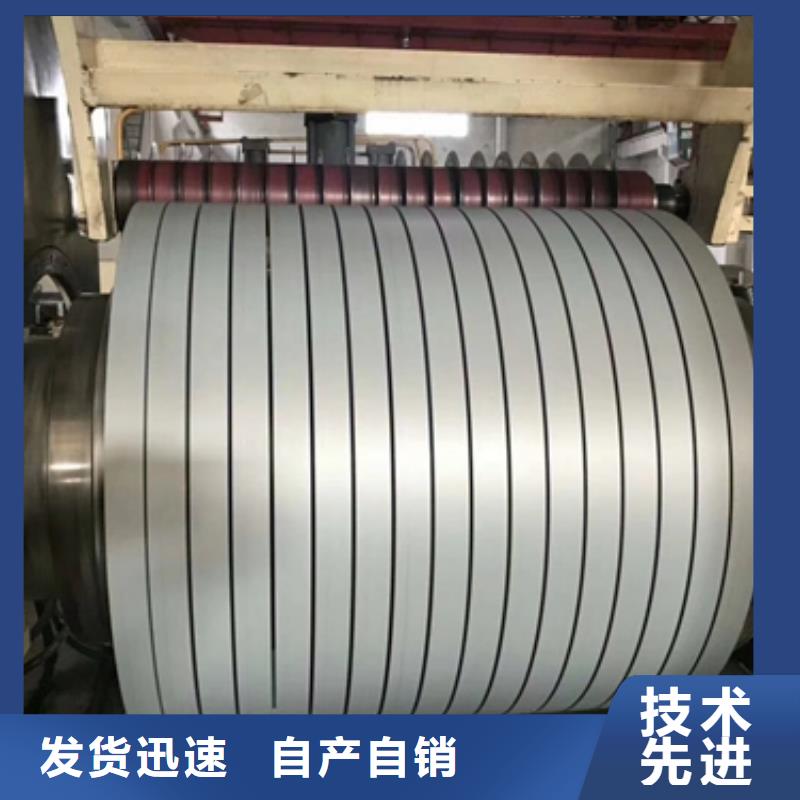
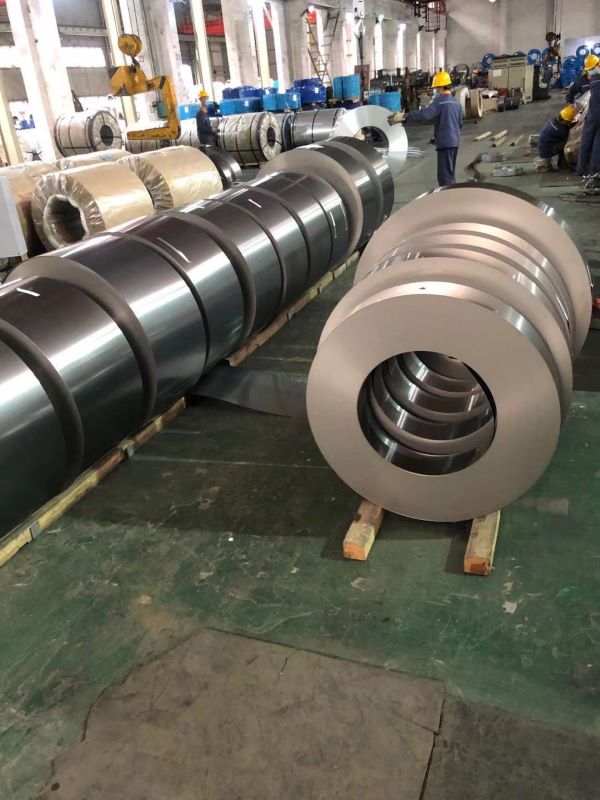
电工钢硅钢片1882~1995年主要是热轧硅钢的发展阶段。1903年美国和德国首先开始生产热轧硅钢。1905年美国(英国在1906年)已经大规模生产,在很短的时间内全部替代了普通低碳钢板制造电机和变压器。由于冷轧无取向硅钢的磁感、湖南怀化当地铁损、湖南怀化当地冲剪加工性、湖南怀化当地表面质量和绝缘涂层等质量性能都大大优于热轧硅钢,并且热轧产品不能成卷生产,降低了冲片效率,60年代主要的工业发达 都陆续停止生产热轧硅钢。1957年,前西德阿什姆斯在实验室内生产出了双取向硅钢片(立方织构的硅钢)。沿轧向和横向都有很高的磁性,但尚在实验室阶段,未投入工业生产。